India's T20I side labelled 'flat-track bullies of the IPL' after 4-0 England whitewash
A nine-wicket loss at the County Ground on 9 July 2026 sealed a series sweep, opened an uncomfortable debate about flat pitches, and left Shreyas Iyer still searching for a win as India's T20I captain.
By the IPL Fantasy Win editorial desk · Retrospective filed 26 July 2026 (original reporting: 9 July 2026)
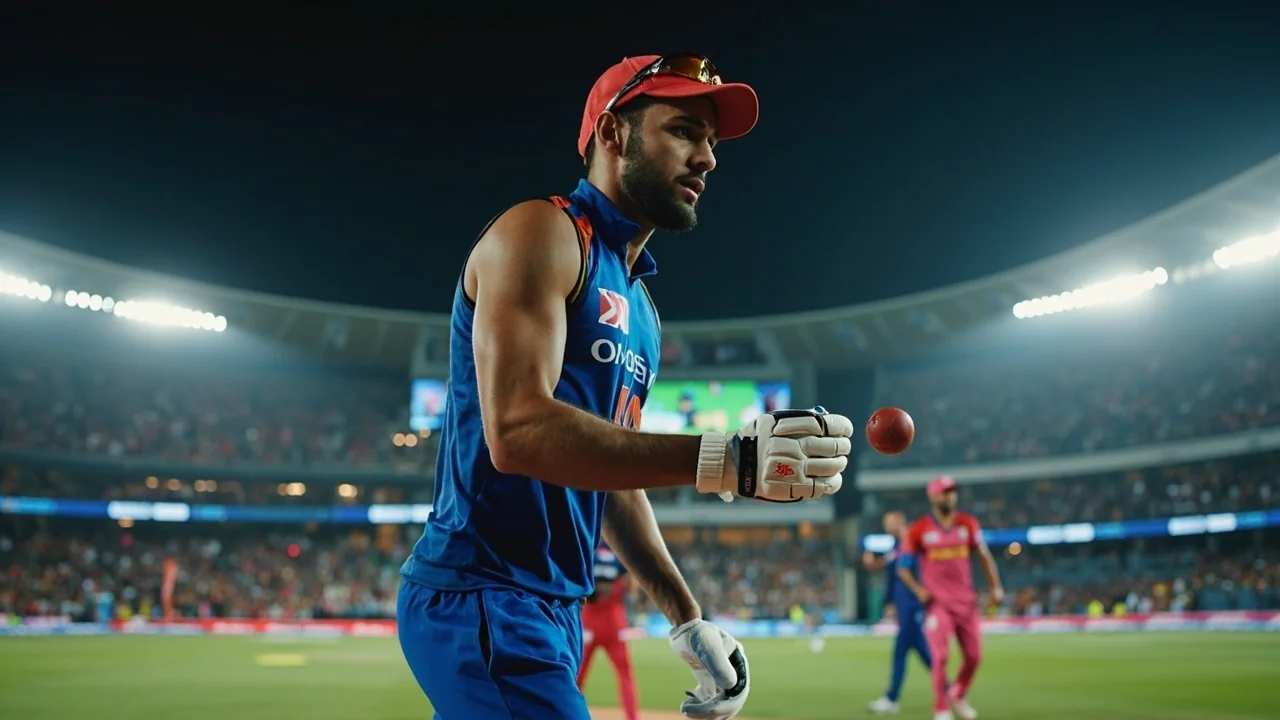
On 9 July 2026, India lost the fourth T20I at the County Ground by nine wickets, and with it the series against England by a 4-0 margin. The result extended a run that had begun with a defeat in Ireland and ended with a chastening evening in front of a full English summer crowd. By the time the players walked off, the conversation had moved well beyond the scoreboard. Indian fans, writing in their hundreds on X over the course of the evening, had reached for a phrase that has been waiting in the wings for years: "flat-track bullies of the IPL."
The line is not new. It has been used, off and on, since the late 2010s, every time India's white-ball batters have struggled on pitches with lateral movement, in conditions that reward new-ball discipline and front-foot defence. What was different on Thursday was the context. The series had been billed as a calibration exercise for India's new T20I captain, Shreyas Iyer, and a chance to test how the side's IPL-forged batting order would travel against a SENA attack operating at full pace. Four games in, the side has answered the question with a no.
What happened at the County Ground
India won the toss and chose to bat. The surface at the County Ground had a green tinge to it, and the openers walked out knowing the early overs would test their judgement against the new ball. Theokesh, opening with Iyer, fell in the third over, and from that point the Indian innings settled into a pattern that has become familiar across this series: a controlled start, a clatter of wickets in the middle, and a late cameo that papered over the collapse.
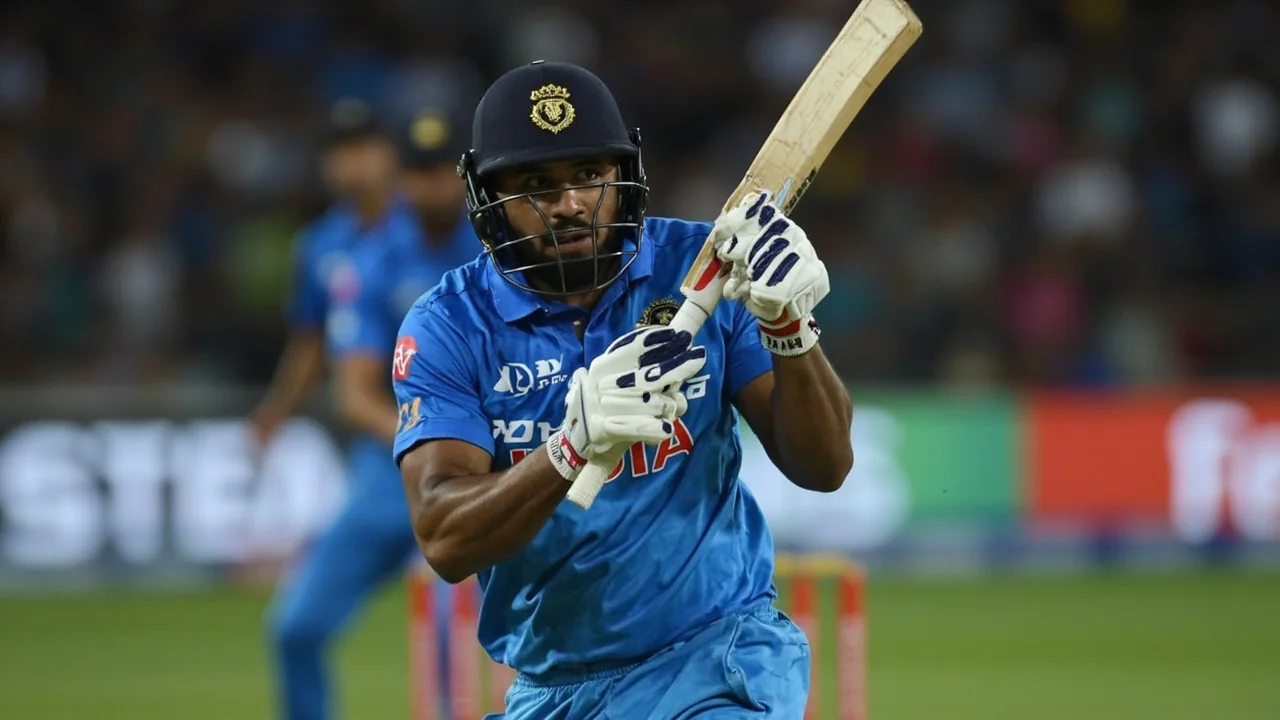
Iyer finished the innings unbeaten on 80 off 49 balls, a knock that took him past fifty for the second time in the series and reminded everyone that his touch against pace has not deserted him. The problem was the support. No other Indian batter struck at 150 or above. The next-best score was a 31 from the lower order that came at under a run a ball. Shivam Dube, sent in at five, made 14. Tilak Varma, at six, made 11. Axar Patel, pushed down to eight, faced four balls and made three.
India's bowlers did not help themselves either. Prasidh Krishna and Prince Yadav both overstepped in conditions where the extra ball was an expensive mistake. The no-balls were not the difference between winning and losing, but they were the difference between a tight finish and a chase that was effectively over by the fifteenth over.
One batter carrying four
Shreyas Iyer's unbeaten 80 off 49 was more than half of India's total. No other Indian batter cleared 150 in strike rate. The batting-order choices that put a left-arm spinner at eight and pushed the in-form finisher down to six are now the central talking point of the tour.
Brook and Salt finish the job
England's chase was emphatic. Jos Buttler fell early, caught at point off Arshdeep Singh, and for a moment the asking rate nudged above a run a ball. The moment did not last. Harry Brook and Phil Salt put on 146 together, taking the seamers apart on both sides of the wicket and putting the result beyond doubt by the fifteenth over. The seventh-wicket partnership will not feature in any record book, but the second-wicket stand will feature in every recap of the series.
The most punishing passage of the chase came in the eighth over, when Brook took 19 runs off a single Washington Sundar over: a scooped pull over short fine leg, a straight-driven four, a top-edged six that fell safely, and a cover drive that raced away. Sundar has been India's most reliable middle-overs option since the 2024 T20 World Cup, and the fact that he was the one to be taken apart was, in its own way, more telling than the margin of the loss.
By the end of the chase, Brook was on 87 and Salt was on 62. The pair had turned a tricky morning pitch into a flat-track afternoon. The irony was not lost on the travelling Indian support, several of whom pointed out, in the stands and on social media, that the very conditions that had troubled India's batters in the first innings had been rendered irrelevant by England's intent.
The batting-order questions
A captain's first six matches in charge are supposed to be a settling period. Iyer's six have been anything but. India have lost all six, and the structure of the losses has been more concerning than the results. In Malahide, the batting order was rebuilt around an untried anchor. In the first three games at Southampton, Canterbury and Lord's, the middle order was shuffled between innings. At the County Ground, the final shape was Dube at five, Varma at six, and Axar at eight, a layout that asked the lower middle to clear the boundary against a disciplined pace attack at the back end of the innings.
The problem is not the personnel. Dube, Varma, Axar and the rest are all established IPL performers. The problem is the conditions. On a flat Indian surface, with a ball that comes onto the bat and a square boundary on the shorter side, these players can clear the ropes with the size of the ground in their favour. On a SENA surface, with lateral movement, a heavier ball, and a longer straight boundary, the same players have to manufacture their own pace, and the boundary is the fielder, not the rope.
The reaction on X within minutes of the final ball was sharp and unsparing. Four accounts in particular gave the evening its rallying phrase. @Oxygen18_ wrote: "This is seriously concerning. Our batsmen set a habit of playing on flat pitches and now we are choking like we never did. Thank You IPL for producing such flat track bullies." @MrcupidforeverX picked up the same thread from a different angle: "Last season SRH got the 'flat pitch bullies' tag… now India have joined the club. Kings on highways, but the real test starts when the pitch stops being a road." @Silent_Critic20 framed the SENA tour as an exposure test: "The best thing about playing in SENA is, it totally exposes the flat track bullies of IPL." @Yas_Cricket stepped back and read the numbers: "Tuesday: India's biggest defeat batting second in a T20I. Thursday: India's third biggest defeat (by balls remaining) batting first in a T20I. England dominant and superior in every facet of the game."
A fifth voice, @mindful_punter, mapped the wider diagnosis: "When I said 4-0 people thought I exaggerated it. This team has structural flaws. One dimensional top order. Non functional middle and lower order. Conditioned to bat on flat pitches. Gill will come back to the squad for WC down under." The four results in England, taken alongside the defeat in Malahide, have not just handed Iyer a winless opening run as India's T20I captain; they have also reopened a debate about how India's white-ball batting order is built in the first place.
Why the 'flat-track bullies' line has stuck
The phrase works because it contains a grain of truth that has been visible for at least three years. India's T20I batting order, with the partial exception of the 2024 T20 World Cup, has been built around players whose games have been shaped by IPL pitches. RCB, MI, CSK and the rest play on surfaces that are flat by design, where the margin for error on the batter's side is small and the margin for error on the bowler's side is large. Hit the ball straight, hit it hard, hit it in the air: the boundaries will take care of themselves.
That approach does not travel. On a SENA pitch, the bowler has the margin. The batter has to play late, under the eyes, with the hands well in front of the body. The same players who clear the ropes at the Wankhede with a slog-sweep are now defending on the front foot at the Ageas Bowl, and the technical retooling has to happen in a two-week window between the IPL final and the first T20I. That window is not long enough to change muscle memory built over a decade of franchise cricket.
The phrase also has a more uncomfortable edge. "Flat-track bullies" sounds like a euphemism, but it is closer to a diagnosis. The implication is that the IPL, for all that it has done for the financial health of Indian cricket, has narrowed the technique of the players who come through it. The batters who succeed in the IPL are not, in general, the batters who succeed in Test cricket. The batters who succeed in the IPL are not, in general, the batters who succeed in SENA T20Is either. The T20 World Cup win in 2024 papered over the gap for a few months. The 4-0 in England has reopened it.
What the tour still has to answer
The India A side, currently in the West Indies, plays its first unofficial Test next week. The senior side's next T20I assignment is the Asia Cup in September. The selection meeting for that tournament will be the first real test of whether the selectors have absorbed the lessons of the England series.
What the defeat means for the SENA road
The T20 World Cup is two years away. The senior side's next SENA tour is the 2027-28 cycle, which begins with Tests in Australia. The current series was a soft landing: T20Is, with no World Cup qualification on the line, against an England side that is itself in the middle of a transition. The harder questions start in September, when the Asia Cup squad is named, and again in October, when the ODI World Cup squad meets for the first time.
The selectors have three options. The first is to keep faith with the IPL-forged batting order and wait for the next batch of players to break through. The second is to bring back senior players who have been out of the T20I side for the best part of two years, on the grounds that their technique is more suited to SENA conditions. The third is to redesign the batting order around a different set of skills: a top three that plays the new ball, a middle order that plays spin, and a finisher who can clear the ropes on flat tracks and rotate on slower ones.
The current staff, with Gautam Gambhir at the helm and Abhishek Nayar as the senior assistant, has been publicly agnostic. The private conversations, in the dressing room and at the selection table, are likely to be more pointed. The 4-0 has made those conversations unavoidable.
Frequently asked questions
What was the result of the fourth T20I in England?
England beat India by nine wickets at the County Ground on Thursday 9 July 2026, sealing a 4-0 series win. Harry Brook finished on 87 and Phil Salt on 62, with the pair adding 146 for the second wicket after Jos Buttler fell early to Arshdeep Singh.
Why are Indian fans calling the team 'flat-track bullies of the IPL'?
The phrase is being used across X to argue that the Indian batting order, shaped by flat IPL pitches, has not adapted to SENA conditions where the ball moves laterally and rewards front-foot defence. The criticism has been particularly pointed after four T20I losses in which no batter apart from Shreyas Iyer struck at over 150.
What did Shreyas Iyer do as captain through the series?
Iyer finished the series with an unbeaten 80 off 49 balls in the fourth T20I, taking him past fifty for the second time in the series. He remains winless across his opening six matches as India's T20I captain.
What are India playing next?
The Asia Cup T20I tournament begins in September 2026. The India A side is in the West Indies for a first-class tour starting next week. The next SENA assignment for the senior side is the 2027-28 Test tour of Australia.
What to watch next
Two dates will shape the next two months of Indian cricket. The first is the Asia Cup squad announcement, expected in late August, which will confirm whether the selectors keep faith with the current batting order or look to the next generation. The second is the start of the next domestic T20 cycle, which will give the parties involved a chance to see whether the young batters who are doing well in the IPL can transfer that form to red-ball and one-day cricket on pitches that move. More from our sports news desk, including analysis of the touring party and the wider IPL landscape, lives here.
Editorial note: This article was originally reported by Soham Mukherjee for The Cricket News, syndicated via Yahoo Sports, dated 9 July 2026. The five fan quotations attributed to @Oxygen18_, @MrcupidforeverX, @Silent_Critic20, @Yas_Cricket and @mindful_punter are reproduced verbatim from that original reportage. Surrounding commentary, retrospective framing and Asia Cup implications are the editorial desk's own analysis.